Yesterday's most used AI model has no known maker
August 27, 2026
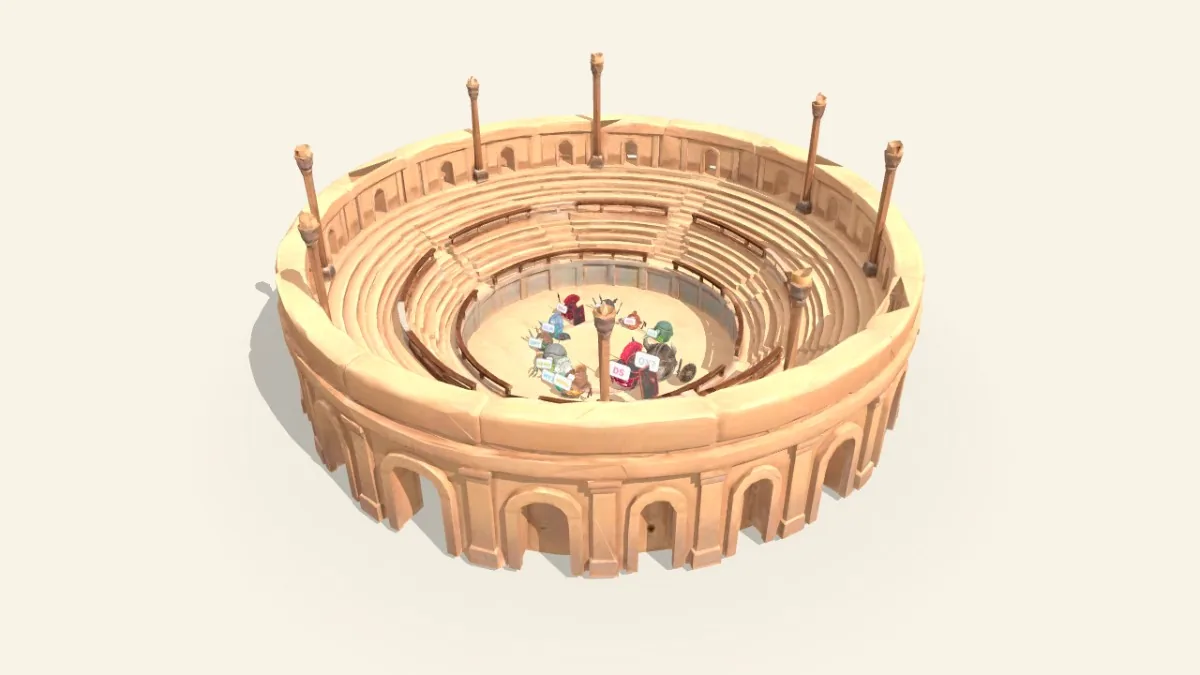
An arena instead of a leaderboard
How much each AI model actually gets used is public. On 26 August 2026 alone, that meant trillions of tokens and hundreds of millions of requests, all of it published.
A table of it reads like nothing. I could not feel the difference between 23.3 trillion and 17.2 trillion.
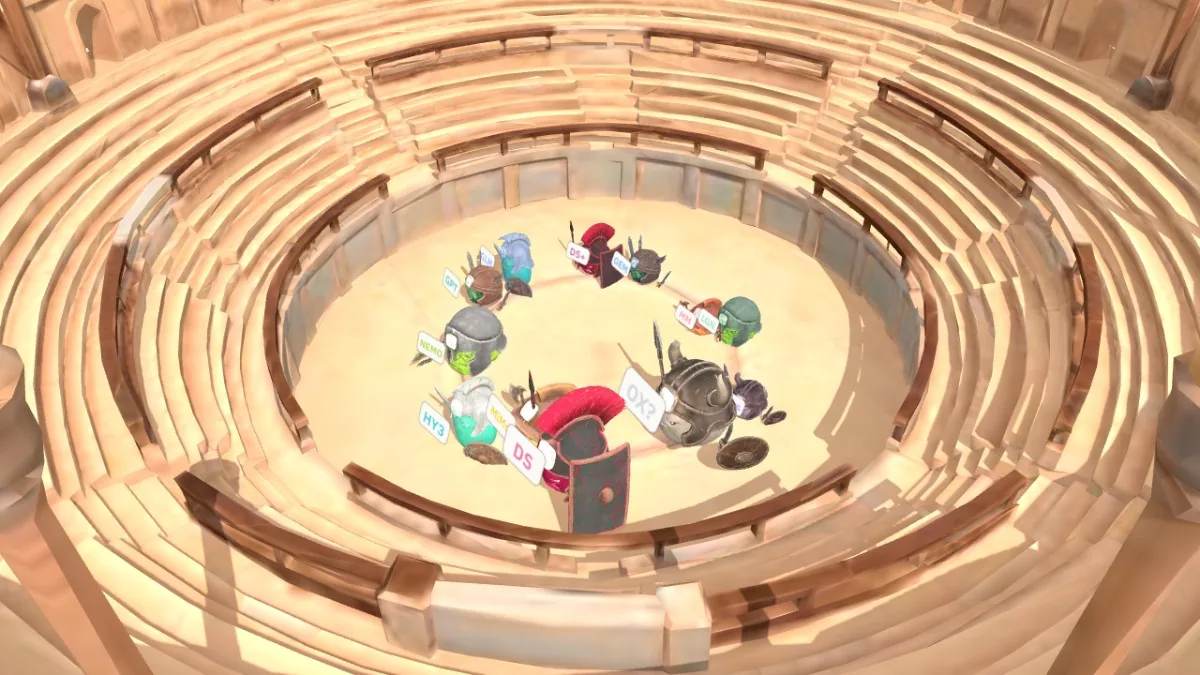
So I turned the numbers into body mass. The models that did more work got bigger and heavier, the ones that did less got small and light. Then I put all twelve in one arena.
One rule
Get hit by something heavier and you fly.
Ox Alpha, first place, handled 23.3 trillion tokens yesterday. Opus 5, twelfth, handled 1.5 trillion. Ox Alpha was released without a named maker. Fifteen times the mass means a graze sends you over the wall. I did not set the physics. The numbers did.
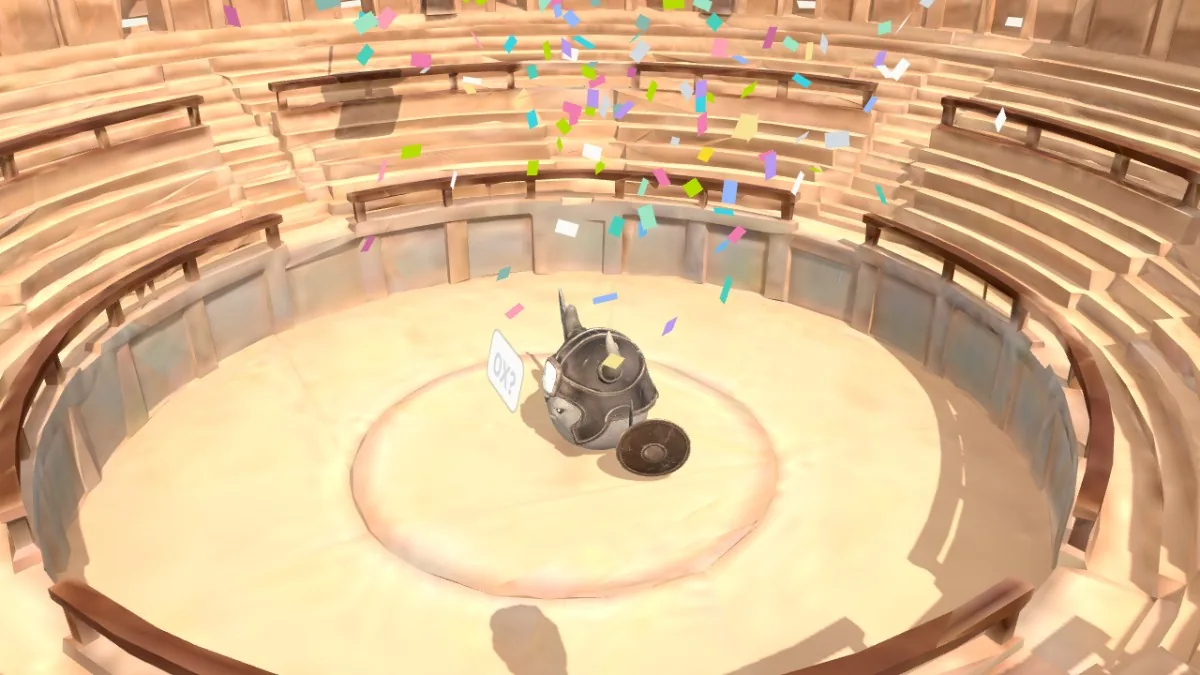
When one is left, confetti drops on it.
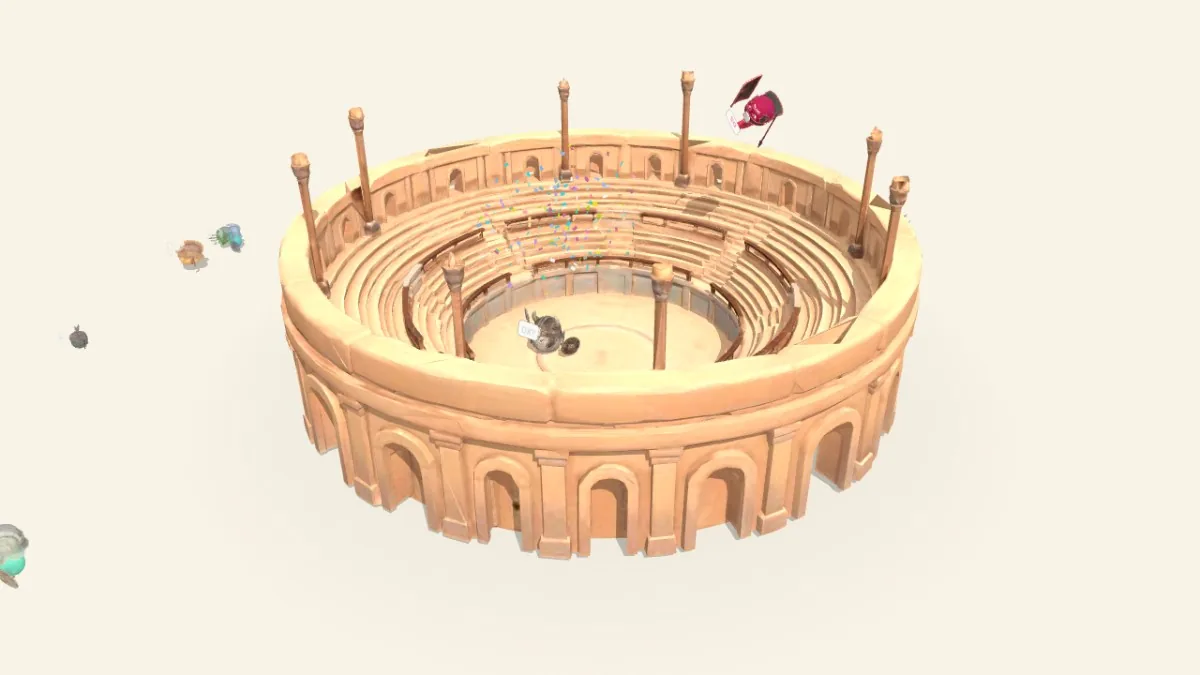
The eleven that flew out bounce once and then lie there, past the seats, where they landed.
Draw first, convert to 3D after
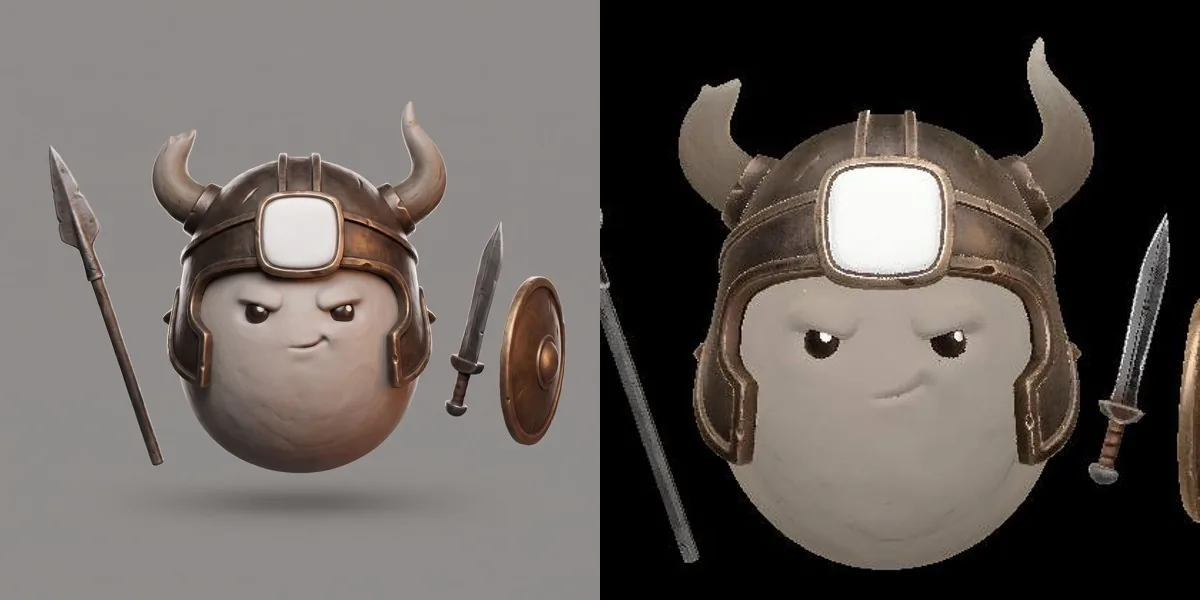
I did not sculpt any of this. I generated a picture, then converted the picture to 3D. Quality is mostly decided at the drawing stage, so throwing out a bad one costs far less there.
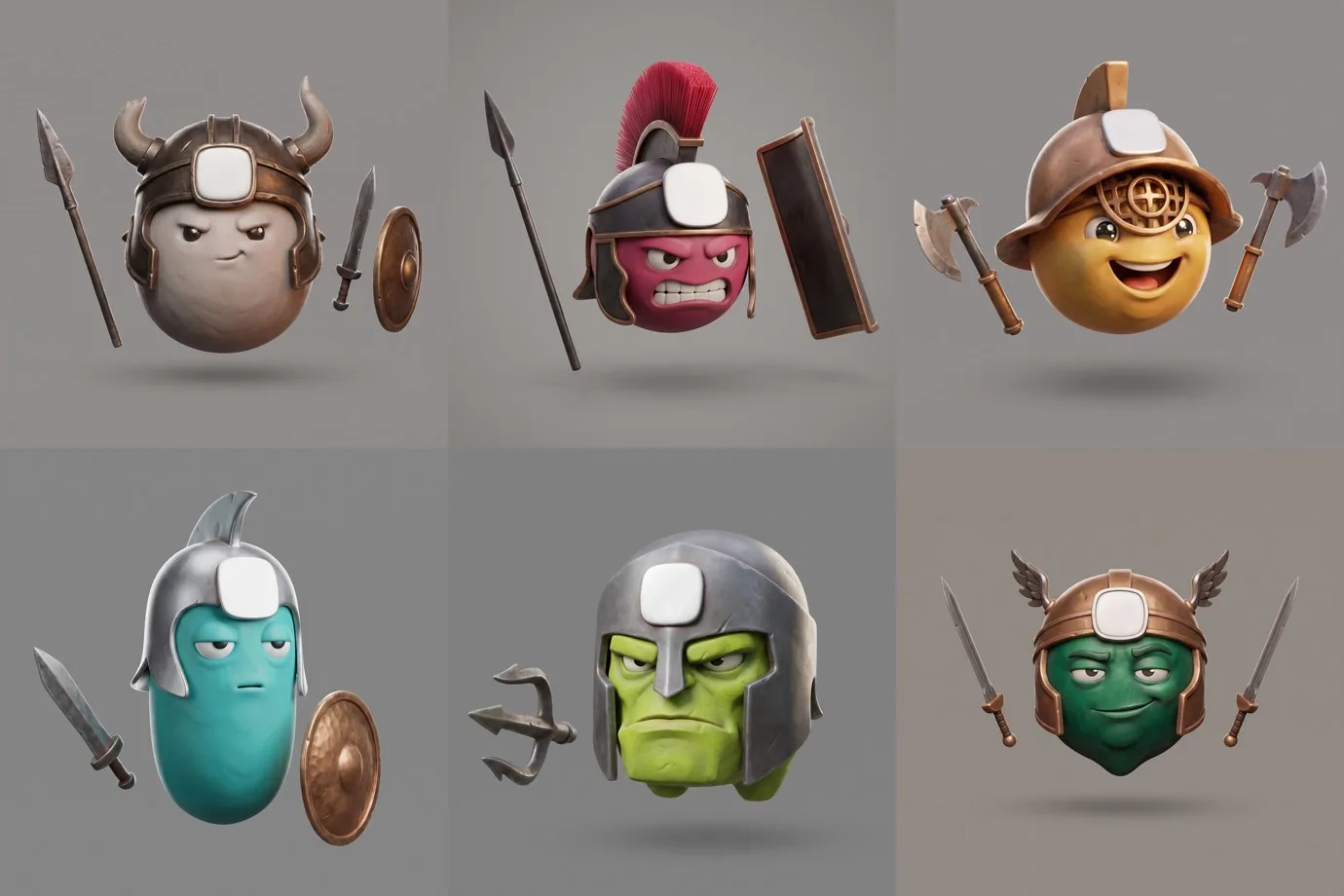
Round fighters whose body is also their head. Each got a different face, expression, helmet and weapon. One with a spear and shield, one with two axes, one with a single trident.
The white plate on each helmet is left empty on purpose. Name tags go there later.
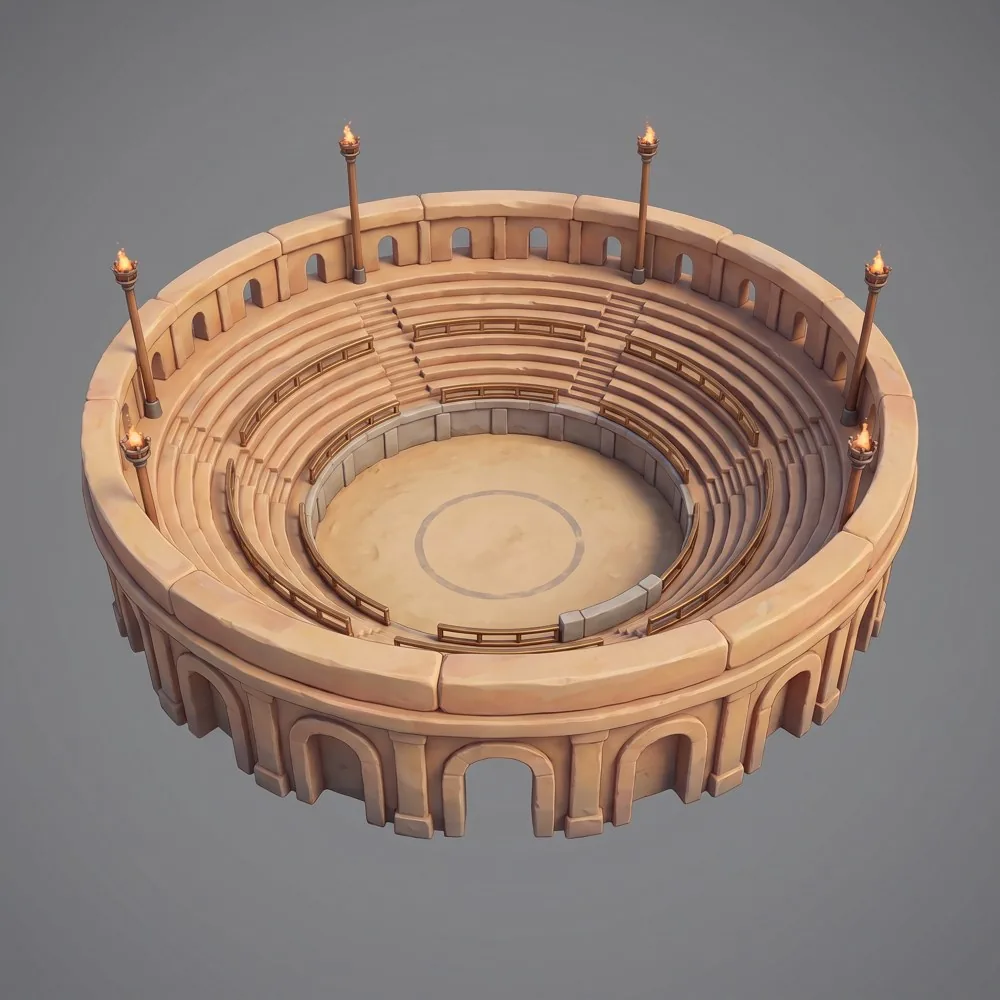
The arena came the same way. I generated a top down view of an open air ring and converted the whole thing.
The weapons move on their own
The weapons are not welded to the bodies. Spears, swords and shields all came through as separate pieces, so a single joint at each grip was enough. That is less work than putting in a real skeleton.
They sway while the fighter walks, then swing up and come down on a charge.
Two wrong guesses before I could delete one piece
Something was sticking out over the top of the arena that is not in the source picture. The converter guesses at surfaces it cannot see, and it invented that piece while filling in the back.
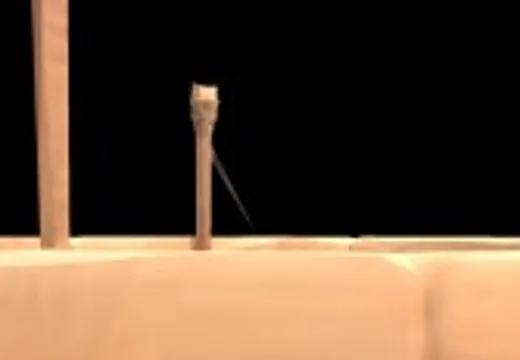
The arena is one welded lump, so cutting out only that part was awkward.
- I picked the largest triangles and deleted them. The top of the wall went with them.
- I looked for pieces that break left right symmetry. Twenty scattered ones came back.
- I fired a ray at that spot on screen and asked what it hit. Two triangles. I deleted those two.
The reasons next to the ranks
Once it was running, the ranking itself takes about thirty seconds to read. So I attached why each one sits where it sits.
Tap a fighter and you get its story. GPT is sixth, and not because it is weak. This ranking watches one developer facing exchange. Whatever moves through the ChatGPT app is not counted here. Google is ninth for the same reason.
Commentary runs during the round and a summary comes up at the end. Things that stood out in the numbers:
- First place has no named maker. Ox Alpha was released without one. The exchange lets unreleased models run under pseudonyms to see how they land, and that is what took yesterday.
- Four of the top seven are Chinese companies. DeepSeek, Xiaomi, Tencent, and Z.ai at seventh.
- Cheaper models get used more. Within DeepSeek alone, the cheap Flash outran the expensive Pro six to one, and a free Nvidia model sits above GPT.
- Ranks flip in days. GLM-5.3 jumped 418 percent in usage overnight.
What it took
Pictures and 3D conversion through Higgsfield, the screen through Three.js. The sound uses no files at all and is built in the browser. The gong, the impacts, the crowd murmur are each a few lines of code.
The impact sound fired about ten times a second at first. With twelve of them jostling that is only natural, but it came out sounding like a machine gun. Dropping the weak contacts and setting a minimum gap brought it down to roughly twice a second.
To watch a round yourself, go to AI Arena. A round takes about a minute.
Source: OpenRouter rankings